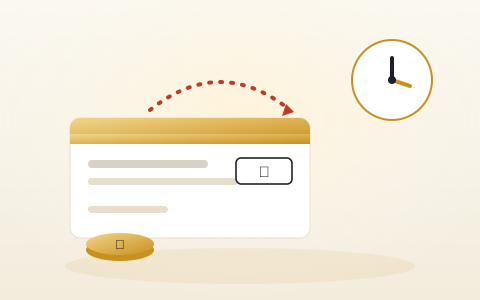
When a cheque you received bounces, the law gives you a clear, time-bound path to recover your money under Section 138 of the Negotiable Instruments Act.
What 'dishonour' means
If a cheque is returned unpaid by the bank — commonly for insufficient funds — you receive a 'cheque return memo'. This is the starting point, so keep it safely along with the original cheque.
The timeline you must follow
The process under Section 138 is strict about time, so the steps below should be tracked carefully with your advocate:
- Send a written demand notice to the person who issued the cheque, within 30 days of receiving the return memo, asking them to pay the amount.
- The drawer then has 15 days from receiving the notice to make the payment.
- If they do not pay within those 15 days, you may file a complaint in the appropriate court, generally within one month after the 15-day period ends.
What the court can order
Section 138 is a criminal provision. On being found liable, the drawer can face imprisonment which may extend up to two years, or a fine which may extend to twice the cheque amount, or both — quite apart from your right to recover the sum due.
Practical tips
- Act immediately when the cheque bounces — the clock starts at once
- Preserve the original cheque and the bank's return memo
- Send the demand notice through your advocate to get the wording and proof right
- Keep evidence of the underlying transaction (why the cheque was given)
The golden rule
Every step in a cheque-bounce case is time-bound. Missing a deadline can weaken an otherwise strong claim, so consult an advocate the moment a cheque is dishonoured.
Have a question about this?
Ask an experienced advocate privately and get a clear answer.